Modifications That Increase Measurable Output
Performance Upgrades & Tuning in Stanfield for vehicles requiring documented horsepower and torque improvements
Performance modifications change how engines breathe, how fuel is delivered, and how ignition timing responds to load conditions—but only when these systems are tuned together do they produce reliable power gains. You need performance upgrades and tuning when your vehicle feels restricted at higher RPM, when you've installed components that require calibration, or when you want measurable increases in horsepower and torque. Old Soul Garage handles performance upgrades and tuning in Stanfield, addressing both naturally aspirated and forced-induction applications with adjustments verified through testing.
Performance exhaust systems replace restrictive factory mufflers and piping with mandrel-bent tubing that maintains constant diameter through bends, reducing backpressure that limits high-RPM power. Cold air intake upgrades move the inlet away from engine heat and increase airflow volume. ECU and performance tuning adjust fuel maps, ignition advance curves, and throttle response to match the increased airflow from intake and exhaust modifications. Without proper tuning, these modifications can actually reduce power or cause driveability problems.
Schedule a performance assessment to identify which modifications will produce the results you want within your budget and usage requirements.
What You Notice Once Modifications Are Tuned
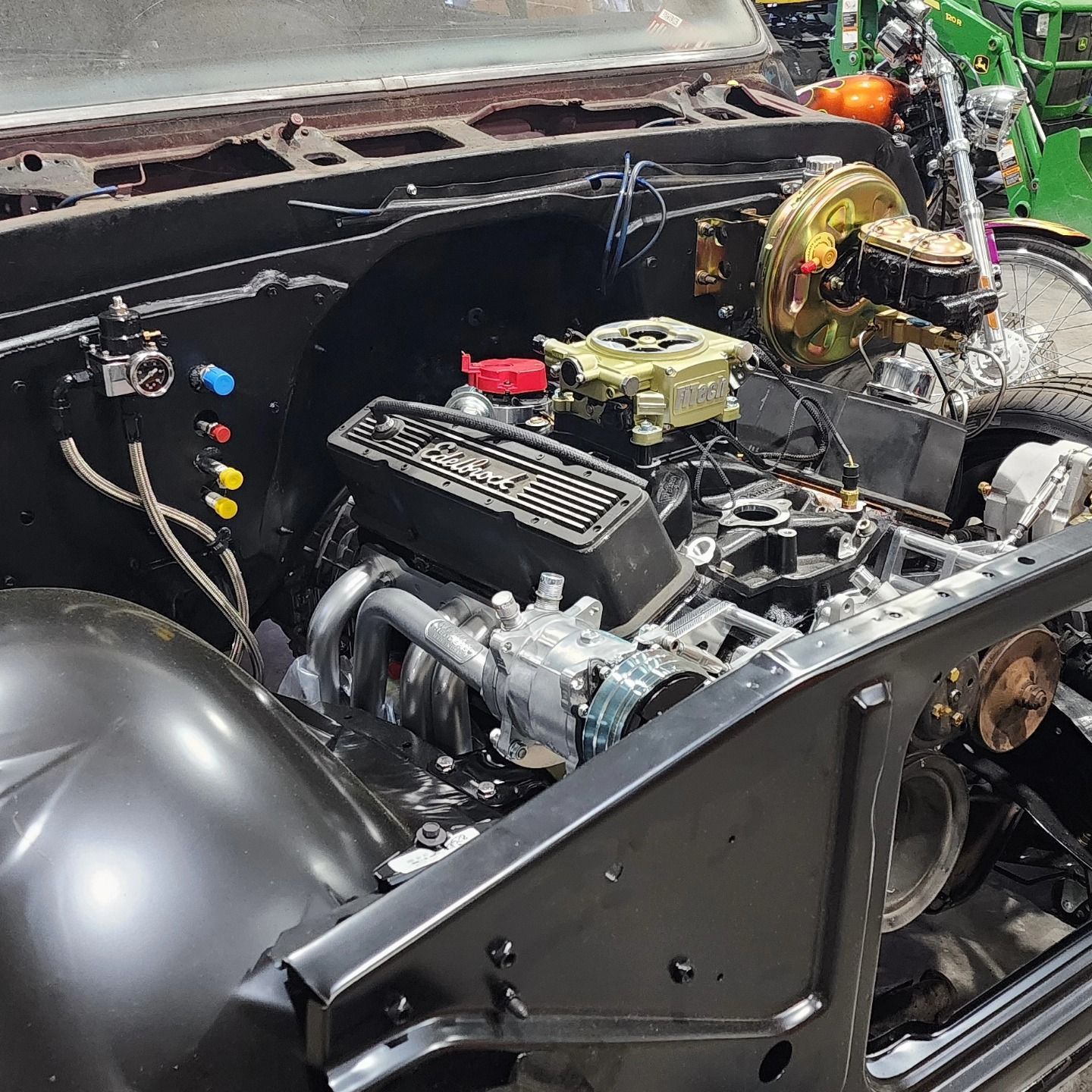
Supercharger and turbo upgrades add forced induction that pressurizes intake air, allowing engines to burn more fuel and generate significantly more power than naturally aspirated configurations. These systems require supporting modifications—fuel injector upgrades that supply adequate volume under boost, intercoolers that reduce intake air temperature, and ECU tuning that adjusts fuel delivery and timing to prevent detonation under pressure. Each component must be sized correctly for the target boost level and horsepower goal.
After upgrades are installed and tuned, the vehicle accelerates harder throughout the RPM range. Throttle response becomes sharper because tuning has eliminated the hesitation or flat spots that occurred with factory calibration. On forced-induction builds, boost pressure builds smoothly and power delivery feels linear rather than abrupt. The engine pulls cleanly to redline without the power drop-off that restrictive exhaust and intake systems previously caused.
Dyno tuning preparation involves baseline testing before modifications to establish stock power output, then retesting after each major change to measure actual gains. This data-driven approach shows exactly what each modification contributes and identifies problems—like lean air-fuel ratios or timing issues—that reduce power or threaten engine durability. Tuning sessions adjust parameters incrementally while monitoring engine response to find the optimal calibration for your specific combination of parts.
What Property Owners Usually Ask
Performance modifications involve decisions about which upgrades produce meaningful results and how components must work together to achieve reliable gains.
What does ECU tuning actually change?
ECU tuning modifies fuel injection timing and duration, ignition advance curves under different load conditions, throttle mapping that controls how the engine responds to pedal input, and boost control settings on forced-induction applications. These parameters are adjusted to maximize power while maintaining safe air-fuel ratios.
How much power do intake and exhaust upgrades add?
Cold air intakes and performance exhaust systems typically add 5-15 horsepower on naturally aspirated engines when properly tuned. Gains come from reducing intake restriction and exhaust backpressure, allowing the engine to move more air through each combustion cycle.
When do fuel injectors need upgrading?
Fuel injector upgrades become necessary when you add forced induction or increase boost pressure beyond stock levels. Factory injectors reach their maximum duty cycle and can't supply enough fuel to match the increased airflow, causing dangerously lean conditions that lead to detonation and engine damage.
What's involved in turbo or supercharger installation?
Forced induction installation includes mounting the compressor unit, fabricating or installing exhaust manifolds and downpipes, routing intake piping with intercoolers to reduce charge temperature, upgrading fuel delivery components, and tuning the ECU to manage boost pressure and fuel delivery under load.
Why is dyno tuning necessary after modifications?
Dyno tuning allows precise measurement of horsepower and torque while monitoring air-fuel ratios, ignition timing, and engine parameters under controlled load conditions. This identifies problems that can't be detected during street driving and ensures modifications produce safe, reliable power gains rather than just loud exhaust noise.
Old Soul Garage builds performance upgrades around realistic power goals and proper tuning to maintain reliability. Set up an appointment to review modification options and discuss dyno tuning preparation for your vehicle.