Drivetrain Work Built Around Power Delivery
Muscle Car Repair & Performance Services in Stanfield for American V8 vehicles requiring high-torque system upgrades
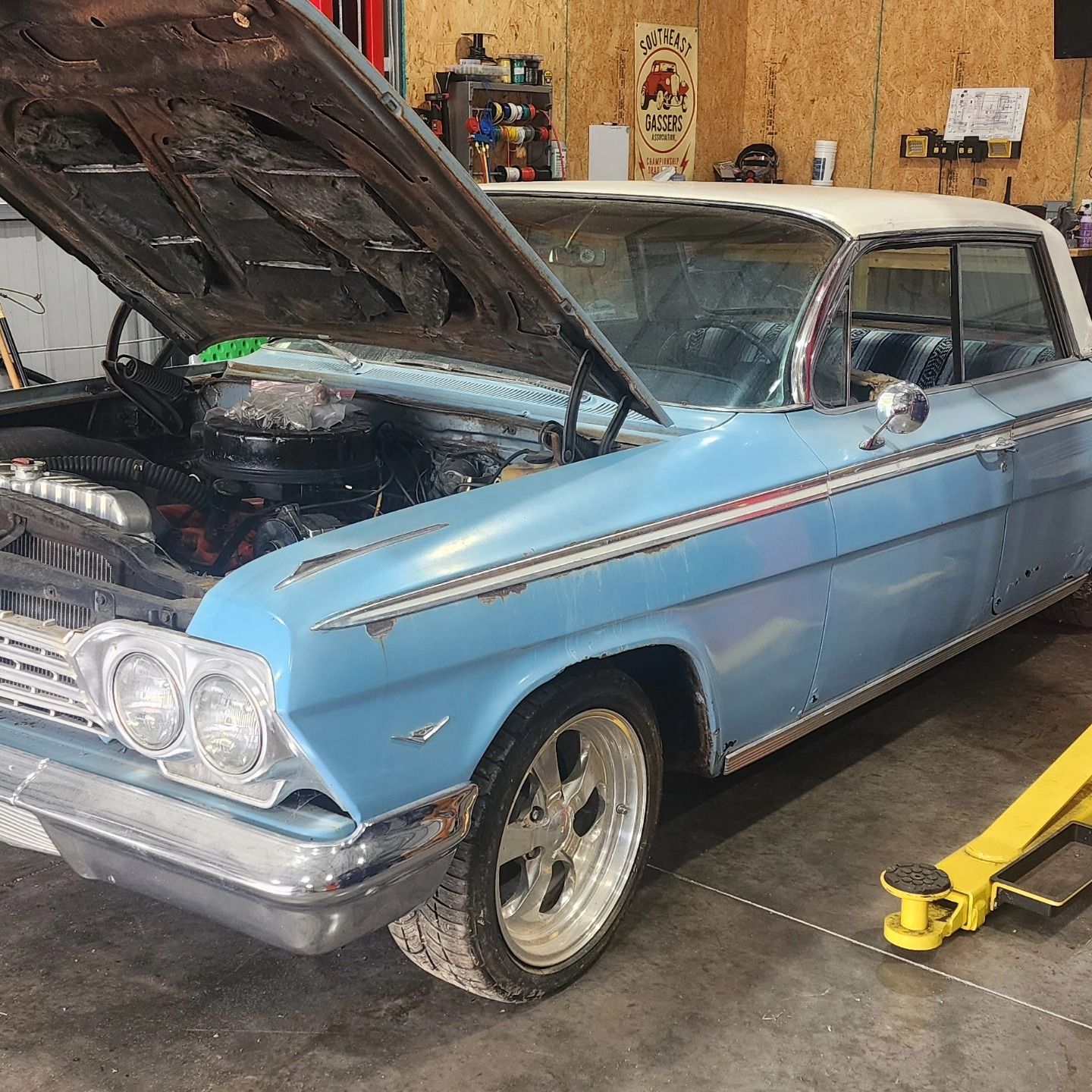
American muscle cars generate torque that stresses drivetrains, suspension components, and fuel delivery systems beyond what they experience in standard vehicles. Old Soul Garage handles muscle car repair and performance services in Stanfield for vehicles built between the mid-1960s and early 1970s, addressing the specific wear patterns these high-output engines create. When your muscle car struggles with wheel hop during launches, fuel starvation at wide-open throttle, or transmission slippage under load, the underlying systems need reinforcement or replacement designed for increased power levels.
Performance-focused repairs address how power moves from the engine through the drivetrain to the wheels. Suspension enhancements replace soft factory springs and worn shocks with components that control body roll and maintain tire contact during hard acceleration. Fuel delivery system repairs upgrade pumps, lines, and carburetors to supply adequate volume when the engine demands maximum fuel flow. Exhaust and header installation removes restrictive factory manifolds that choke airflow at high RPM.
Request an inspection to identify which systems limit your vehicle's performance and reliability under demanding conditions.
What Changes After Performance Upgrades Are Installed
High-performance tuning involves adjusting ignition timing curves, jetting carburetors for optimal air-fuel ratios, and setting valve lash to manufacturer specifications for the camshaft profile. Drivetrain upgrades replace clutches or torque converters that can't handle increased engine output, install stronger axle shafts that won't twist under torque, and add limited-slip differentials that transfer power to both rear wheels instead of spinning one tire uselessly.
After the work is finished, the vehicle responds differently to throttle input. Acceleration becomes linear without the hesitation or surge caused by inadequate fuel delivery. Launches no longer produce wheel hop because suspension components now control the transfer of torque to the pavement. The exhaust note deepens and the engine pulls smoothly to higher RPM because headers eliminate backpressure that previously restricted flow.
Muscle car maintenance services include checking components that experience higher stress from increased power output. This means inspecting U-joints for play, monitoring transmission fluid condition for signs of clutch material breakdown, and verifying that cooling systems maintain temperature during extended high-load operation. These vehicles require more frequent attention to wear items than daily drivers operating at factory power levels.
Common Questions About This Service
Performance work on muscle cars involves decisions about balancing power increases with durability and street usability.
What does suspension enhancement involve for muscle cars?
Suspension work includes replacing soft factory springs with higher-rate units that reduce body roll, installing adjustable shocks that control rebound and compression, and adding sway bars that limit weight transfer during cornering or hard launches.
How do fuel delivery upgrades prevent power loss?
Fuel system upgrades install higher-volume pumps that maintain pressure under demand, larger fuel lines that reduce restriction, and carburetor jetting changes that prevent lean conditions when the engine requires maximum fuel flow at wide-open throttle.
When do drivetrain components need upgrading?
Drivetrain upgrades become necessary when you increase engine power beyond factory ratings, causing clutches to slip, torque converters to generate excessive heat, or axle shafts to twist or break under the load of launches or high-torque acceleration.
What's the difference between street and race tuning?
Street tuning maintains driveability for varied conditions—smooth idle, responsive part-throttle, and reliable starting—while race tuning sacrifices low-speed manners for maximum power output in a narrow RPM range suited to track use.
Why does exhaust design matter for performance?
Exhaust header design affects how efficiently spent gases exit the cylinders. Long-tube headers with proper primary tube length create scavenging effects that pull exhaust out and improve cylinder filling, increasing power across the RPM range compared to restrictive factory manifolds.
Old Soul Garage builds performance upgrades around how you use the vehicle, balancing power with durability for street-driven muscle cars in Stanfield. Schedule a performance evaluation to review modification options specific to your vehicle and goals.